
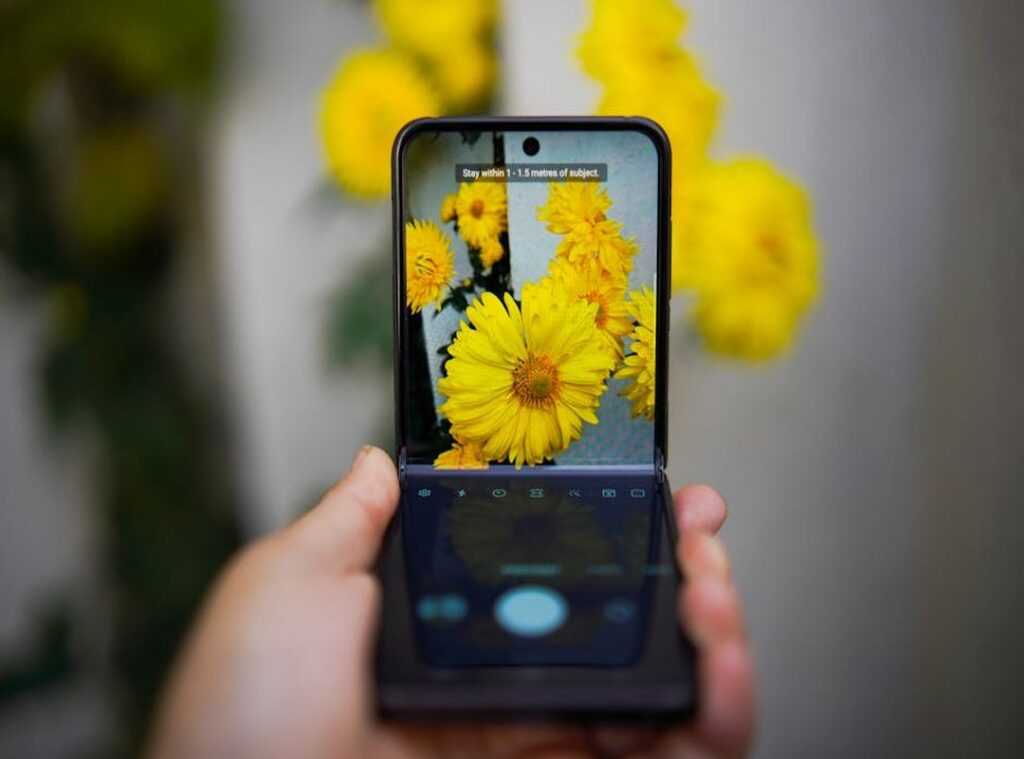
Foldable phones are not just a gimmick. I get it. You might think they’re a passing trend, a flash in the pan.
But the foldable phones market is heating up and changing how we use devices. Remember when everyone thought touchscreen phones were unnecessary? Look where we are now.
Foldables are not just phones; they’re transforming into something more, blending tablets’ flexibility with smartphones’ convenience.
Are these devices worth the investment, though? Absolutely. Manufacturers are pouring resources into innovation.
They see the potential. We’re talking about a new way to interact with technology.
Does this mean every foldable is perfect? Not by a long shot. Early adopters know there are bumps along the way.
But these are getting ironed out fast. This article will dive into where the market is heading and why it matters to you.
Trust me, this is worth your time. Let’s explore the present and future of foldables together.
Foldable Phones: The Future in Your Pocket
What’s a collapsible smartphone, you ask? It’s the magic of fitting a tablet-sized screen into your pocket. These gadgets come in two main forms.
There’s the fold (like a book) and the flip (like a clamshell). Imagine the Galaxy Z Fold, opening up like a tiny book to reveal a larger screen. Then there’s the flip style, resembling the iconic design of the Motorola Razr but with a modern twist.
People are buzzing about the foldable phones market because it brings back excitement in phone design.
Why should you care? It’s simple. More screen space without more bulk.
You get to keep that big display for binge-watching while enjoying the convenience of a regular phone. It’s the first noteworthy design shift since those boring slabs we’ve been using for years. Speaking of innovations, check out New Medical Devices Transforming Healthcare to see how tech is crossing into every field.
How Do These Devices Bend Without Breaking?
Foldable phones. Have you seen them? They’re like something straight out of a sci-fi movie.
But how do they actually work? Let’s dive into the basics. Two main components make them tick: the flexible display and the hinge mechanism.
Without these, the foldable phones market wouldn’t exist.
First, the display. You might think of glass as rigid and unforgiving, but Ultra-Thin Glass (UTG) changes that. This isn’t your usual glass.
It’s wafer-thin and bendy. Then you have plastic OLED (pOLED), which replaces the traditional rigid screens. These displays can fold because they’re made to flex, not shatter.
Imagine a piece of paper you can fold without creasing (that’s) the idea here.
Now, onto the hinge. It’s the phone’s spine, really. It’s not just about opening and closing smoothly.
It keeps the screen protected and operates like a high-tech watch band or even a tank tread, allowing it to hold positions at different angles. This complexity is key. You wouldn’t want your expensive device flopping around like wet spaghetti, right?
The combo between these two features is key. Without it, you’d just have a fragile phone begging to be broken. Engineers pour their energy into perfecting this interaction.
It’s a battleground for tech companies, each striving to outdo the other. That’s where the excitement lies. In their race for innovation.
So next time you see a foldable phone, remember it’s a marvel of modern engineering, not just a gimmick.
Market Space: Power Moves and Plan
The foldable phones market is a wild arena right now. Samsung’s been the early bird here, and boy, did it catch the worm. They’ve nailed down that early-mover advantage with the Galaxy Z series.
You know the one, right? The phones that fold like something out of a sci-fi movie. Samsung’s gamble on this tech seems to be paying off.
But they’re not alone.
Google’s Pixel Fold is coming in hot with its own unique software magic. Motorola, with its nostalgia-driven Razr reboot, is not playing around either. Huawei and Oppo are also throwing down, each with their own flagship models (and these aren’t just copycats).
Huawei’s got that camera quality nailed, while Oppo focuses on sleek design.
Competition is fierce. Is it all about price? Not really.
These brands are battling over durability, features, and who can cram the best camera into a foldable. Apple? They’re holding back.
Maybe they’re waiting for the tech to mature. Or maybe they’re just cautious about market readiness. Apple’s hesitation could be about ensuring their foldables meet their high standards.
Who knows?
Right now, Samsung leads the pack. Google’s catching up with its integration of Android magic. Others are jockeying for position.
It’s like watching a high-stakes poker game unfold. Speaking of tech revolutions, if you’re curious about what’s next in smart home devices, check out game-changing smart home devices 2023. The space is shifting fast.
Just like in the foldable phone scene.
Current Hurdles: What’s Stopping Mass Adoption?
Ever wonder why foldable phones aren’t in everyone’s pocket yet? Let’s get real about what’s holding back their mass adoption.

First, durability. Sure, they look cool, but who wants a phone that might snap in two? People have concerns about the durability of the screens.
That crease? It’s like a scar on your phone’s face. And then there’s the dust and water resistance.
Or lack thereof. Traditional phones can take a dunk or dust storm better than these foldables. Not to mention the hinge mechanism.
It’s complex, and complexity usually means more stuff that can break.
Now, cost. Why so expensive? Well, you’re paying for all that complex research and development.
Those flexible displays and sturdy hinges aren’t cheap to make. This is why these devices cost far more than your standard flagship phone. It’s like buying a Ferrari when you just need a Toyota.
Makes you think, right?
Software and app optimization is another major roadblock. Many apps just can’t quite get the hang of folding screens. You get this clunky interface that feels half-baked.
Who wants a phone that can’t handle their favorite apps smoothly? Developers are still figuring out how to make software adapt seamlessly between different screen states, which isn’t easy. But it’s key for the foldable phones market to thrive.
If you’re still curious and want to dive into specifics, check out the best folding phones. Curious how they’ll tackle these hurdles next? So am I.
Foldable Tech: What’s Next?
I’ve seen foldable tech make huge strides, but let’s talk about what’s next. Creaseless displays are what we’re all waiting for, right? Imagine a screen that looks seamlessly perfect, no distracting lines when you open it up. That’s a huge leap in the foldable phones market.
We’ve all had that moment (amazed) by the tech, but with a niggling doubt about those creases. Fixing that? Game-changing.
Then there are hinges. Smaller but stronger hinges are the holy grail. I mean, who wants to deal with a bulky phone that doesn’t fold smoothly?
Engineers are always promising “strong” designs, but I’m waiting for the day when they mean it. Maybe they’re getting there. Dust-proofing is another issue.
It sounds trivial until your expensive foldable decides to choke on a speck of dust. I’m thinking we’ll see tech borrowed from other industries. Like the watch industry, perhaps.
But here’s a thought. How about we go beyond simple folding? What about rollable or tri-fold devices?
I’ve heard whispers of patents and concepts. This could be the shake-up we need. Imagine a device that doesn’t just fold, but rolls into your pocket like paper.
We might not be there yet, but it’s surely on the horizon.
And let’s face it, the price needs to drop. More competition and better manufacturing mean cheaper devices. That’s just a fact of tech evolution.
It’s about time foldable phones became accessible. And when they do, they could merge with other technologies, like AR or multi-tasking software, creating new user experiences. Isn’t that what we’re all looking for?
A device that’s more than just a phone? That’s the future I’m holding out for.
New Moves in a Rapidly Folding Market
You get it now, don’t you? The foldable phones market is a maze of durability, cost, and user experience. But you’re on top of it.
You’ve nailed the basics, separated real innovation from the hype. The market’s complex, sure, but armed with this know-how, you’re ready to spot the next big thing. Keep your eyes peeled for breakthroughs.
Want to lead the pack? Stay informed. Visit immorpos353.com and never miss an update.
They’re the go-to for innovation alerts and core tech takeaways. Don’t just watch the market unfold; be part of the future.

 Ask Bradford Folandevada how they got into emerging device breakthroughs and you'll probably get a longer answer than you expected. The short version: Bradford started doing it, got genuinely hooked, and at some point realized they had accumulated enough hard-won knowledge that it would be a waste not to share it. So they started writing.
What makes Bradford worth reading is that they skips the obvious stuff. Nobody needs another surface-level take on Emerging Device Breakthroughs, Insider Knowledge, Secure Protocol Development. What readers actually want is the nuance — the part that only becomes clear after you've made a few mistakes and figured out why. That's the territory Bradford operates in. The writing is direct, occasionally blunt, and always built around what's actually true rather than what sounds good in an article. They has little patience for filler, which means they's pieces tend to be denser with real information than the average post on the same subject.
Bradford doesn't write to impress anyone. They writes because they has things to say that they genuinely thinks people should hear. That motivation — basic as it sounds — produces something noticeably different from content written for clicks or word count. Readers pick up on it. The comments on Bradford's work tend to reflect that.
Ask Bradford Folandevada how they got into emerging device breakthroughs and you'll probably get a longer answer than you expected. The short version: Bradford started doing it, got genuinely hooked, and at some point realized they had accumulated enough hard-won knowledge that it would be a waste not to share it. So they started writing.
What makes Bradford worth reading is that they skips the obvious stuff. Nobody needs another surface-level take on Emerging Device Breakthroughs, Insider Knowledge, Secure Protocol Development. What readers actually want is the nuance — the part that only becomes clear after you've made a few mistakes and figured out why. That's the territory Bradford operates in. The writing is direct, occasionally blunt, and always built around what's actually true rather than what sounds good in an article. They has little patience for filler, which means they's pieces tend to be denser with real information than the average post on the same subject.
Bradford doesn't write to impress anyone. They writes because they has things to say that they genuinely thinks people should hear. That motivation — basic as it sounds — produces something noticeably different from content written for clicks or word count. Readers pick up on it. The comments on Bradford's work tend to reflect that.