
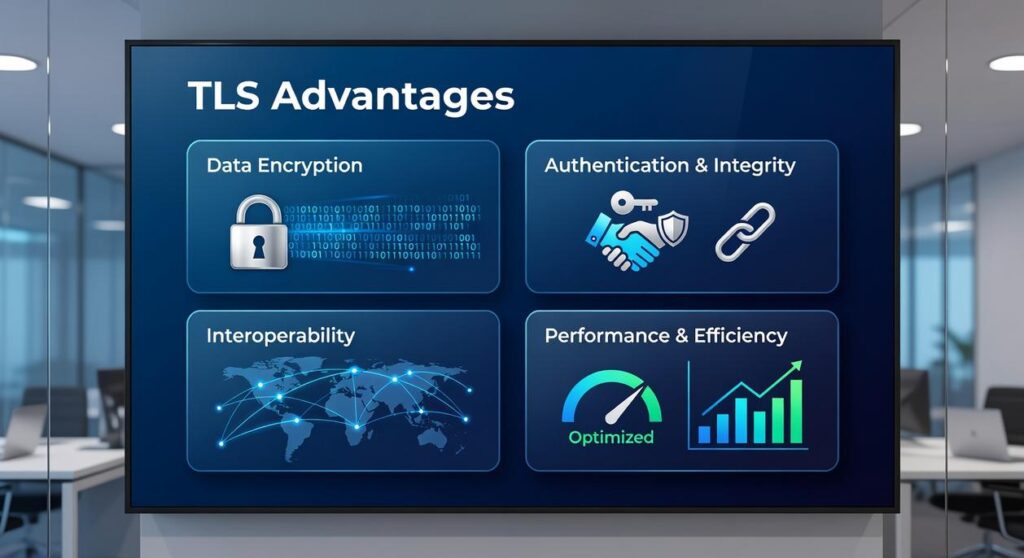
If you’re searching for clear answers about tls vs ssl differences, you’re likely trying to understand which protocol actually secures your data—and whether SSL still has a place in modern systems. With evolving cybersecurity threats and stricter compliance standards, knowing how these encryption protocols work (and which one you should be using) is critical.
This article breaks down the core technical distinctions between TLS and SSL, explains how encryption standards have advanced over time, and clarifies common misconceptions that still circulate in developer communities. We’ll also explore performance, security vulnerabilities, handshake processes, and real-world implementation considerations.
Our analysis is based on current security documentation, protocol specifications, and industry best practices used in secure web infrastructure today. Whether you’re managing a server, developing an application, or simply strengthening your cybersecurity knowledge, this guide will give you the clarity and confidence to make informed decisions about secure communication protocols.
That little browser padlock isn’t decoration; it’s first line of defense. Many people use SSL and TLS interchangeably, but they’re not the same. Secure Sockets Layer (SSL) is original encryption protocol, now deprecated due to vulnerabilities (see RFC 7568). Transport Layer Security (TLS) is its stronger successor, using cipher suites and improved handshakes.
Here are tls vs ssl differences:
- SSL supports outdated cryptographic algorithms.
- TLS offers forward secrecy and integrity checks.
Using SSL today exposes data to interception. Developers and IT teams must configure TLS 1.2 or 1.3 to protect credentials, payments, and APIs. (Yes, the padlock matters.)
The Pioneer: A Look Back at SSL (Secure Sockets Layer)
Secure Sockets Layer (SSL) was the original cryptographic protocol built to secure communication over the internet. In simple terms, a cryptographic protocol is a set of rules that uses encryption—scrambling data so only authorized parties can read it—to protect information in transit.
Developed by Netscape in the mid-1990s, SSL introduced versions SSL 2.0 and later SSL 3.0, both designed to encrypt the connection between a web server and a browser. That little padlock icon in early browsers? SSL made it possible (yes, the quiet hero of early e-commerce).
The benefit was massive: encrypted sessions protected passwords, credit card numbers, and personal data from interception—laying the foundation for online banking and shopping.
However, all SSL versions are now deprecated due to severe, unfixable vulnerabilities like POODLE (Padding Oracle On Downgraded Legacy Encryption), which allowed attackers to decrypt secure sessions (Google Security Blog, 2014). Understanding tls vs ssl differences helps you see why modern TLS replaced SSL entirely.
Knowing this history helps you make safer protocol choices today.
The Successor: Understanding TLS (Transport Layer Security)
Transport Layer Security (TLS) is the direct, more secure successor to SSL (Secure Sockets Layer). Developed by the Internet Engineering Task Force (IETF), TLS was created to fix known weaknesses in SSL while preserving its core purpose: encrypting data sent between a user’s browser and a website.
TLS 1.0 was essentially an upgrade of SSL 3.0. Later versions—1.1, 1.2, and the modern 1.3—introduced stronger encryption algorithms (mathematical methods used to scramble data), better authentication, and faster handshakes (the initial process where two systems agree on how to communicate securely).
In simple terms, TLS does the same job as SSL—but better. It protects passwords, credit card numbers, and private messages from interception.
When you see HTTPS in your browser, you are using TLS, not SSL. The phrase tls vs ssl differences still confuses many people (understandably), but today, SSL is outdated technology in name and function.
The Core Differences: How TLS Outperforms SSL

When engineers debate tls vs ssl differences, the conversation quickly moves from branding to architecture. SSL (Secure Sockets Layer) is effectively deprecated, while TLS (Transport Layer Security) is its modern successor. They may look similar in Wireshark traces, but under the hood, the distinctions are significant.
Authentication and Integrity
SSL relied on older Message Authentication Codes (MACs) such as MD5-based constructions. A MAC (Message Authentication Code) is a cryptographic checksum that verifies data hasn’t been altered in transit. TLS strengthens this process by using HMAC (Hash-based Message Authentication Code), which combines a cryptographic hash function with a secret key for improved tamper resistance. According to RFC 2104, HMAC mitigates collision weaknesses found in older hash implementations.
In real-world deployments—like financial data centers running compliance-heavy workloads—this stronger integrity check reduces the risk of silent packet manipulation (the kind that keeps CISOs awake at 2 a.m.).
Cipher Suites
A cipher suite defines the algorithms used for encryption, key exchange, and integrity. SSL supported outdated options like RC4 and MD5, both now considered cryptographically broken (NIST has formally deprecated them). TLS supports modern suites such as AES and ChaCha20, designed for high performance and resistance to known cryptanalytic attacks.
• SSL: RC4, MD5 (legacy, vulnerable)
• TLS: AES, ChaCha20, SHA-256 (modern, secure)
Pro tip: Disable legacy cipher fallback entirely in production environments to prevent downgrade attacks.
The Handshake Process
The handshake establishes encryption parameters between client and server. TLS streamlines this exchange and introduces a more robust Alert Protocol, offering granular error codes instead of SSL’s vague notifications. That precision accelerates debugging in enterprise SOC workflows.
Vulnerability Resilience
SSL’s structural weaknesses enabled exploits like POODLE (padding oracle attack) and DROWN (cross-protocol attack). TLS redesigns record padding validation and key exchange mechanisms to mitigate these flaws (see US-CERT advisories on both attacks).
For organizations implementing zero trust architecture in modern networks, adopting TLS isn’t optional—it’s foundational.
The Lingering Ghost: Why We Still Say “SSL Certificate”
If we use TLS, why does everyone still say “SSL Certificate”? Short answer: HISTORY and HABIT.
Secure Sockets Layer (SSL) dominated early web encryption, so its name became shorthand for “website security.” Even after Transport Layer Security (TLS) replaced it, the label stuck—much like calling every adhesive bandage a Band‑Aid.
Here’s what competitors rarely clarify: a modern “SSL Certificate” does NOT run the SSL protocol. It’s a digital certificate—meaning a cryptographic file that verifies identity and enables encrypted connections. Servers today are configured to use TLS exclusively, because SSL versions were deprecated due to security flaws (POODLE, for example, per Google’s security advisories).
Think of tls vs ssl differences as evolution, not coexistence.
In practice, that means:
- The certificate format works with TLS
- SSL protocol is disabled
- The name persists for marketing clarity
LANGUAGE LAGS BEHIND TECHNOLOGY. And security precision matters.
Security today is like locking your doors in a digital city. SSL was the rusty padlock; TLS is the reinforced smart lock with rotating codes. If you’re still running SSL 2.0 or 3.0, you’re guarding a skyscraper with a paper badge. Explicitly disable SSL 2.0/3.0 and TLS 1.0/1.1 in your server configuration. Then prioritize TLS 1.3 and 1.2 for every connection. Think of it as choosing fiber over dial-up.
Yes, some argue legacy support prevents breaking older systems. But clinging to outdated protocols is like keeping a VHS player in a streaming world. Attackers exploit weak handshakes, downgrade attacks, and cipher flaws documented by security researchers (see IETF RFC 8996). Review tls vs ssl differences and update your configurations accordingly.
Modern trust starts with modern encryption. Implementing TLS correctly isn’t optional; it’s the concrete foundation beneath every login, checkout, and API call. Make the upgrade before trouble knocks. On purpose.
You came here to finally understand how secure communication protocols work, where vulnerabilities hide, and what truly separates outdated encryption from modern protection. Now you have clarity on the mechanics, the risks, and the practical implications behind tls vs ssl differences—and why those differences directly impact your data security.
Outdated protocols are more than a technical inconvenience. They expose systems to breaches, compliance failures, and costly downtime. In a world of escalating cyber threats, relying on legacy encryption is a risk you can’t afford.
Strengthen Your Security Today
Don’t wait for a vulnerability scan to reveal gaps the hard way. Upgrade your configurations, audit your certificates, and ensure your infrastructure is aligned with modern TLS standards now. Organizations that proactively modernize their security protocols dramatically reduce breach risks and improve performance.
If securing your systems feels complex, get expert guidance and use trusted, up-to-date implementation resources to eliminate misconfigurations fast. Take action today—harden your encryption, close protocol gaps, and protect your data before attackers test your defenses for you.

 Ask Bradford Folandevada how they got into emerging device breakthroughs and you'll probably get a longer answer than you expected. The short version: Bradford started doing it, got genuinely hooked, and at some point realized they had accumulated enough hard-won knowledge that it would be a waste not to share it. So they started writing.
What makes Bradford worth reading is that they skips the obvious stuff. Nobody needs another surface-level take on Emerging Device Breakthroughs, Insider Knowledge, Secure Protocol Development. What readers actually want is the nuance — the part that only becomes clear after you've made a few mistakes and figured out why. That's the territory Bradford operates in. The writing is direct, occasionally blunt, and always built around what's actually true rather than what sounds good in an article. They has little patience for filler, which means they's pieces tend to be denser with real information than the average post on the same subject.
Bradford doesn't write to impress anyone. They writes because they has things to say that they genuinely thinks people should hear. That motivation — basic as it sounds — produces something noticeably different from content written for clicks or word count. Readers pick up on it. The comments on Bradford's work tend to reflect that.
Ask Bradford Folandevada how they got into emerging device breakthroughs and you'll probably get a longer answer than you expected. The short version: Bradford started doing it, got genuinely hooked, and at some point realized they had accumulated enough hard-won knowledge that it would be a waste not to share it. So they started writing.
What makes Bradford worth reading is that they skips the obvious stuff. Nobody needs another surface-level take on Emerging Device Breakthroughs, Insider Knowledge, Secure Protocol Development. What readers actually want is the nuance — the part that only becomes clear after you've made a few mistakes and figured out why. That's the territory Bradford operates in. The writing is direct, occasionally blunt, and always built around what's actually true rather than what sounds good in an article. They has little patience for filler, which means they's pieces tend to be denser with real information than the average post on the same subject.
Bradford doesn't write to impress anyone. They writes because they has things to say that they genuinely thinks people should hear. That motivation — basic as it sounds — produces something noticeably different from content written for clicks or word count. Readers pick up on it. The comments on Bradford's work tend to reflect that.