

Innovation is moving faster than most teams can document it—let alone implement it. If you’re searching for clear, practical insights into emerging technologies, device breakthroughs, and secure protocol development, this article is built to give you exactly that. We focus on breaking down complex core tech concepts into actionable guidance, so you can move from idea to execution with confidence.
Whether you’re refining your tech product roadmap development strategy, evaluating new hardware integrations, or strengthening system security, staying ahead requires more than headlines. It demands structured analysis, real-world testing perspectives, and practical troubleshooting knowledge.
Our approach combines deep technical research, continuous monitoring of innovation alerts, and hands-on evaluation of emerging solutions. The result? Clear explanations, grounded insights, and forward-looking guidance that help you anticipate change—not just react to it. By the end of this article, you’ll have a sharper understanding of the trends shaping today’s tech landscape and the practical steps needed to apply them effectively.
From Concept to Market Leader: A Blueprint for Tech Product Strategy
Great products fail without strategy (yes, even brilliant code). START WITH THE PROBLEM. Define your target user and their pain points—specific, costly, frequent. Next, validate demand through interviews and a prototype. Then map tech product roadmap development across three horizons: core value, expansion, optimization.
- Build an MVP that solves urgent need.
- Measure retention, not downloads.
- Iterate in 30-day sprints.
Consider Slack: it pivoted from gaming to messaging after feedback. Some argue vision beats data; in reality, testing de-risks core ideas. Pro tip: kill features ruthlessly.
Phase 1: Foundational Discovery and Market Validation
If you skip this phase, you’re not innovating—you’re gambling. In my experience, most failed products didn’t suffer from bad code; they suffered from solving the wrong problem.
Defining the Core Problem
Move beyond shiny features and identify the underlying pain point. The Jobs to Be Done framework (a method that focuses on what users are “hiring” a product to accomplish) forces clarity. People don’t buy project management software; they hire it to reduce chaos. That distinction changes everything.
Competitive Landscape Analysis
Look beyond direct competitors. Alternatives—spreadsheets, manual workflows, even “doing nothing”—are real competition. Map strengths, weaknesses, and technological gaps. I’m opinionated here: if you can’t clearly articulate your edge, you don’t have one. Period.
- Identify substitute behaviors
- Audit feature depth vs. usability
- Spot security or performance blind spots
User Persona and Ideal Customer Profile (ICP)
An ICP is a data-backed description of your perfect customer. Guessing leads to bloated tech product roadmap development. Precision leads to traction.
Initial Viability Testing
Before building, test assumptions. Landing pages, interviews, smoke tests. Dropbox validated demand with a simple demo video (proof beats polish).
Pro tip: If users won’t give you time or email addresses, they won’t give you money.
Phase 2: Architecting the Technical Roadmap and Core Protocols
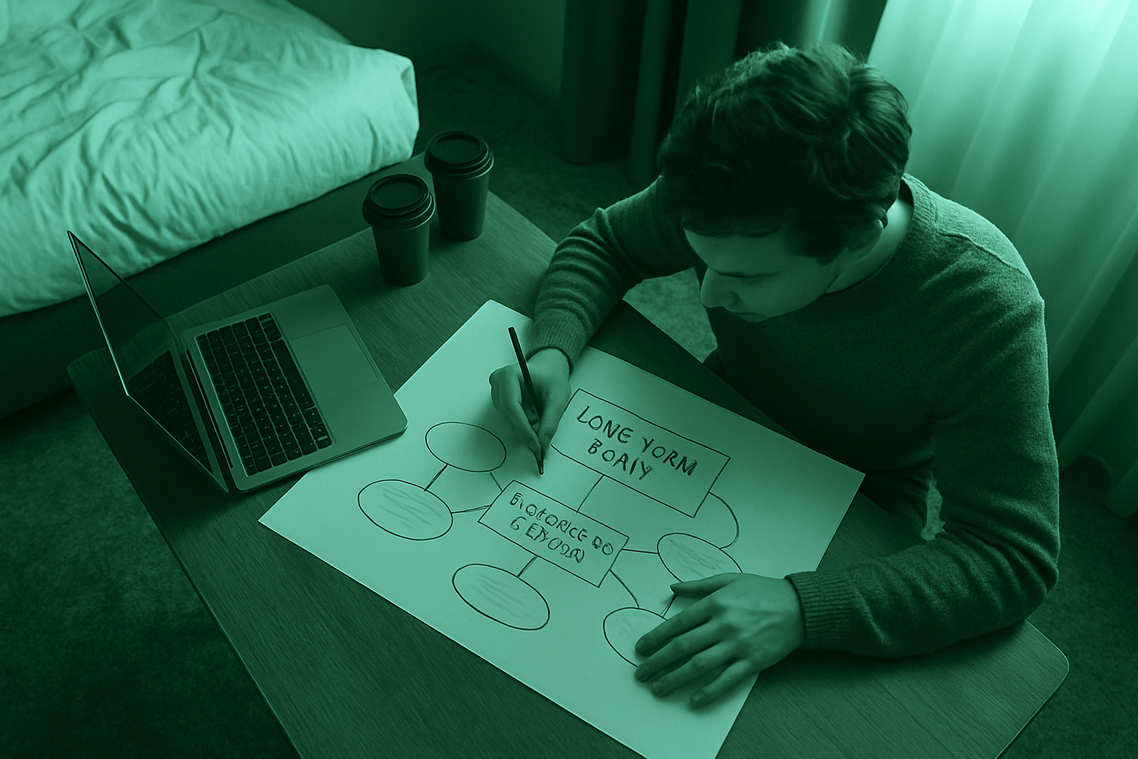
Defining the Minimum Viable Product (MVP)
An MVP (Minimum Viable Product) is the leanest version of your product that delivers real value. In practical terms, that might mean launching only the single claims-processing workflow in a healthtech platform or just the core payment API in a fintech build. The goal is validated learning—not polish. In fast-moving hubs like Austin’s startup corridor or London’s Shoreditch scene, teams that ship focused MVPs gather user feedback weeks ahead of competitors still debating button colors (yes, that happens).
Some argue you should build broader functionality to “impress the market.” But seasoned operators know investors and early adopters care more about traction than theatrics.
Technology Stack Selection
Your technology stack—the combination of programming languages, frameworks, and infrastructure—must align with scalability and security needs. A SaaS platform handling HIPAA-regulated data in the U.S. requires stricter compliance controls than a local retail inventory app. Avoid trendy frameworks unless your hiring pool supports them. Stability beats hype every time.
Critics may say cutting-edge stacks attract top developers. Sometimes. But long-term maintenance costs (and onboarding friction) often outweigh that shine.
Secure Protocol Development from Day One
Security protocols—rules governing encryption, authentication, and data flow—should be embedded early. Implement AES-256 encryption, role-based access control (RBAC), and threat modeling tailored to your architecture. Retrofitting security later is like adding seatbelts after a crash.
Building the Product Roadmap
Effective tech product roadmap development requires visual clarity. Break initiatives into Now, Next, and Later buckets to maintain agility. This outcome-driven framing aligns teams and resonates with investors researching what venture capitalists look for in emerging tech startups.
A roadmap isn’t a rigid contract. It’s a strategic compass—directional, adaptable, and grounded in measurable milestones.
Phase 3: Agile Development and Iterative Advancement
Agile development turns big ideas into workable increments. Instead of building everything at once (and hoping it works), frameworks like Scrum and Kanban break progress into short, manageable sprints. In Scrum, teams work in fixed cycles—often two weeks—while Kanban focuses on continuous flow using visual task boards. Both approaches support tech product roadmap development by translating strategy into daily, testable action.
Establishing Feedback Loops That Actually Work
However, speed without feedback is just fast guessing. That’s why structured feedback loops matter. In-app surveys, beta testing groups, and usage analytics help validate features before full rollout. For example, if analytics show users abandoning a workflow midway, that signals friction. Addressing it early prevents costly redesigns later. Pro tip: prioritize feedback tied to measurable behavior, not just opinions.
At the same time, technical debt—shortcuts taken to ship faster—must be managed deliberately. Allocate a fixed percentage of each sprint to refactoring and improving architecture. This protects long-term scalability and security.
Finally, use every iteration to refine your understanding of user needs and core technology performance. Each sprint should answer a question or test an assumption. Over time, this disciplined learning process transforms uncertainty into validated progress.
Phase 4: Go-to-Market Strategy and Future-Proofing
First, craft the launch plan in phases. Start with a controlled alpha or beta group—real users in real conditions (because lab perfection rarely survives the wild). Then expand deliberately, aligning marketing, sales, and support around shared milestones. Some argue for a big-bang launch to “make noise fast.” That can work for hype-driven apps. But for complex tech products, phased rollouts reduce risk and surface issues early—before they become expensive headlines.
Next, define Key Performance Indicators (KPIs)—measurable values that show whether you’re hitting objectives—before launch. Track engagement, adoption rates, churn (the percentage of users who leave), and activation time. Without clear metrics, you’re steering blind. Pro tip: benchmark against industry averages from sources like McKinsey or Gartner to ground expectations in reality.
Finally, plan beyond launch. Scalability, feature expansion, and emerging device shifts must feed back into your tech product roadmap development. Some say adaptability invites scope creep. In truth, disciplined iteration future-proofs innovation (think less “Blockbuster,” more “Netflix pivot”).
Last year, I watched a promising app collapse because we skipped discovery and rushed to build. That failure pushed me to embrace a structured, phase-by-phase plan that turns chaos into clarity. This framework aligns vision, validation, and secure architecture so innovation is intentional, not accidental. Think of it as upgrading from guesswork to GPS (yes, like finally leaving MapQuest behind). By combining market testing, iterative feedback, and tech product roadmap development, you build what users actually need—and pivot when reality shifts. Start with Foundational Discovery. Define assumptions. Test them. Build forward, strategically. Momentum follows clarity, not frantic motion. Every time.
As teams meticulously craft tech product roadmaps, they often consider groundbreaking advancements like quantum chips, which could transform consumer devices and redefine user experiences in the near future – for more details, check out our How Quantum Chips Could Transform Consumer Devices.
Stay Ahead of Innovation Before It Leaves You Behind
You came here looking for clarity in a fast-moving tech landscape—and now you have it. From innovation alerts and core technology principles to emerging device breakthroughs and secure protocol development, you’re better equipped to navigate change with confidence.
The real challenge isn’t access to information. It’s keeping up before critical shifts impact your systems, strategy, or security. Falling behind on trends, mismanaging tech product roadmap development, or overlooking vulnerabilities can cost time, money, and competitive advantage.
The next step is simple: stay proactive. Monitor innovation signals consistently, stress-test your infrastructure, and align your roadmap with emerging standards before disruptions occur.
If you’re ready to eliminate uncertainty and make smarter technology decisions, start implementing structured review cycles and forward-looking planning today. Thousands of forward-thinking professionals rely on trusted insights to stay ahead—don’t wait until you’re reacting. Take control now and future-proof your strategy.

 Ask Joel Pablocincos how they got into innovation alerts and you'll probably get a longer answer than you expected. The short version: Joel started doing it, got genuinely hooked, and at some point realized they had accumulated enough hard-won knowledge that it would be a waste not to share it. So they started writing.
What makes Joel worth reading is that they skips the obvious stuff. Nobody needs another surface-level take on Innovation Alerts, Insider Knowledge, Secure Protocol Development. What readers actually want is the nuance — the part that only becomes clear after you've made a few mistakes and figured out why. That's the territory Joel operates in. The writing is direct, occasionally blunt, and always built around what's actually true rather than what sounds good in an article. They has little patience for filler, which means they's pieces tend to be denser with real information than the average post on the same subject.
Joel doesn't write to impress anyone. They writes because they has things to say that they genuinely thinks people should hear. That motivation — basic as it sounds — produces something noticeably different from content written for clicks or word count. Readers pick up on it. The comments on Joel's work tend to reflect that.
Ask Joel Pablocincos how they got into innovation alerts and you'll probably get a longer answer than you expected. The short version: Joel started doing it, got genuinely hooked, and at some point realized they had accumulated enough hard-won knowledge that it would be a waste not to share it. So they started writing.
What makes Joel worth reading is that they skips the obvious stuff. Nobody needs another surface-level take on Innovation Alerts, Insider Knowledge, Secure Protocol Development. What readers actually want is the nuance — the part that only becomes clear after you've made a few mistakes and figured out why. That's the territory Joel operates in. The writing is direct, occasionally blunt, and always built around what's actually true rather than what sounds good in an article. They has little patience for filler, which means they's pieces tend to be denser with real information than the average post on the same subject.
Joel doesn't write to impress anyone. They writes because they has things to say that they genuinely thinks people should hear. That motivation — basic as it sounds — produces something noticeably different from content written for clicks or word count. Readers pick up on it. The comments on Joel's work tend to reflect that.